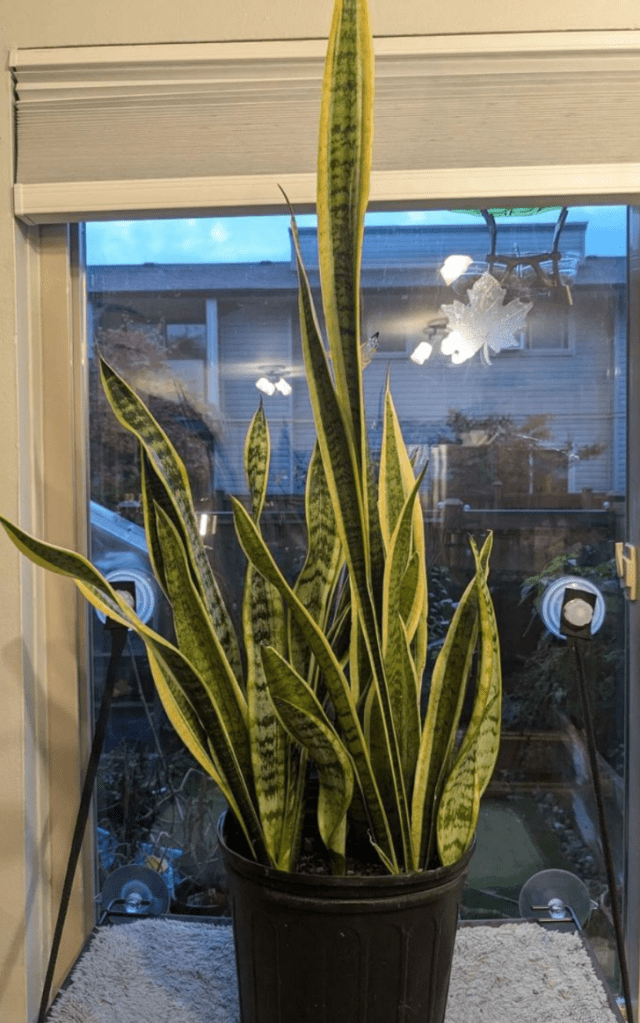
Snake Plants
Dracaena trifasciata, Sansevieria, snake plant, mother-in-laws tongue. This plant goes by many names but is widely regarded as a very easy to care for plant. Native to West Africa, and tropical climates like Mexico or Brazil, this plant is no stranger to dry conditions. It has adapted to withstanding drought by exchanging oxygen for carbon dioxide only at night to prevent moisture loss.
Care
Often recommended as a great starter plant snake plants need very little active care. These plants can survive with very little water and very little light. It prefers to dry out between waterings and likes to be fairly tight in its pot. Its roots are rhizomes that spread underground or near the surface but can rot if they are kept too wet. In the winter months it is recommended that you water very infrequently, only when the soil has dried out.
Toxicity
Snake Plants contain saponins which are mildly toxic to dogs and cats if eaten. This can cause stomach troubles if eaten in higher quantities. The tough leaves will deter all but the most intense plant nibblers, but if your furry friend has a tendency to snack on plants you may want to put it somewhere they can’t get to.

 Leah's Little Leaves